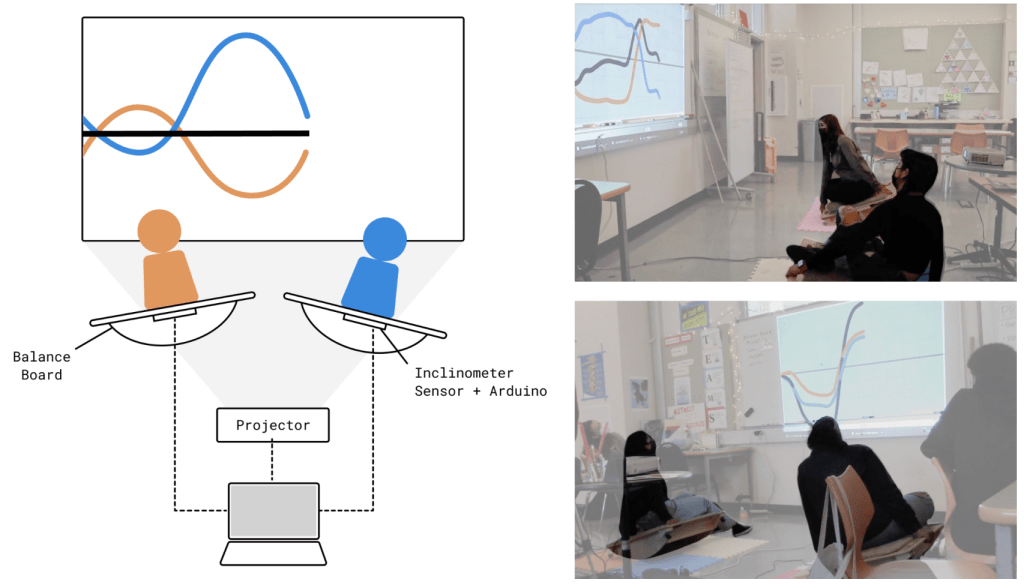
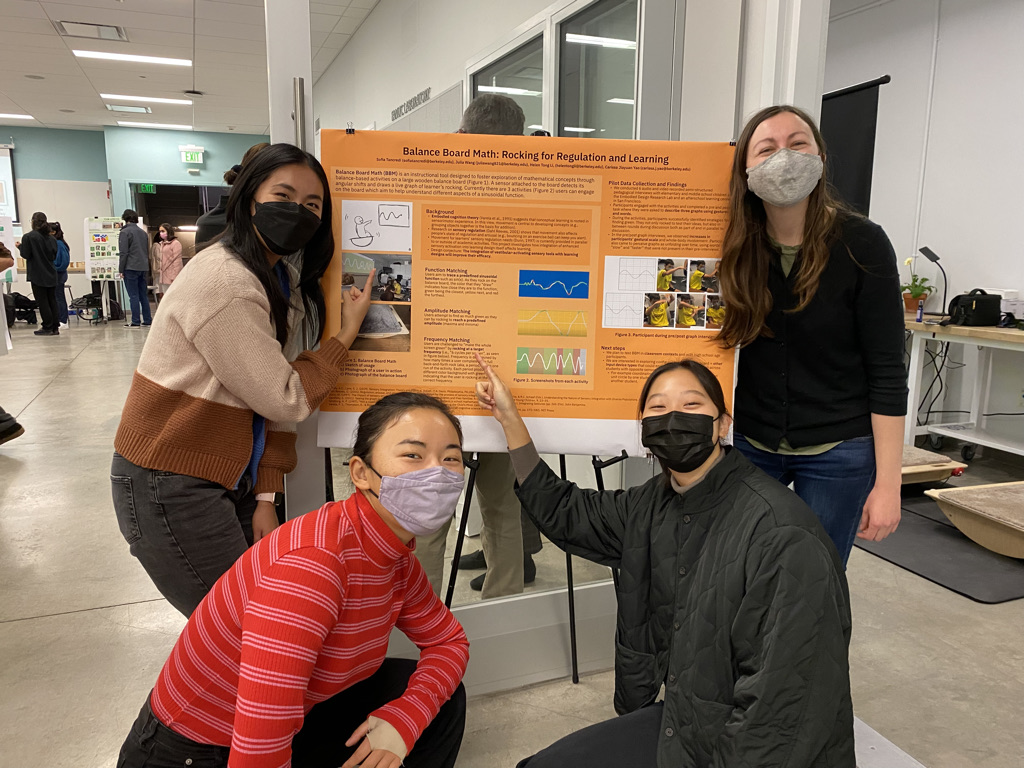
Balance Board Math (BBM) aims to foster new forms of inclusive math pedagogy by incorporating learner’s experiences of balance. Learners rock on wooden balance boards to explore a range of mathematical concepts including functions, negative numbers and equations.
Design Team: Sofia Tancredi, Helen Li, Julia Wang, Carissa Yao, Kimiko Ryokai
Research Team: Genna Macfarlan, Yuqian Liu, Johnny Serrano, May Sar-Israel, Evelene Zhang, Katie Macfarlan, Melissa Rubusch
Research-Practice Partners: Elizabeth Dutton, Kiara Danavaro. Read about some of our work together in this research-practice brief.
Project Rationale
Some forms of movement, such as rocking, are common means of sensory self-regulation yet are discouraged in classroom contexts. This classroom conflict between self-regulation and student-regulation disproportionately affects sensory seekers: individuals who require high sensory stimulation through movement in order to regulate and attend. In parallel, recent developments in cognitive science suggest that moving in new ways forms the basis for conceptual learning (Varela et al., 1991), and the balance sensory system has been specifically implicated in cognitive development and conceptual reasoning (Antle et al., 2013; Hitier et al. 2014). As such, we seek to foster opportunities for the regulatory movement of rocking to serve as a resource for exploring mathematical concepts and representations.
Read more:
- Tancredi, S. (2024). Balance Board Math: Exploring the sense of balance as a basis for functions and graphing and number line concepts. Digital Experiences in Mathematics Education 10, 202–227. https://doi.org/10.1007/s40751-024-00140-1
- Tancredi, S. & Abrahamson, D. (2024). Stimming as thinking: A critical reevaluation of self-stimulatory behavior as an epistemic resource for inclusive education. In B. de Koning, S. Sepp, & S. Zhang (Eds.), Human movement and learning [Special issue]. Educational Psychology Review 36, 75.https://doi.org/10.1007/s10648-024-09904-y
Balance Graphing
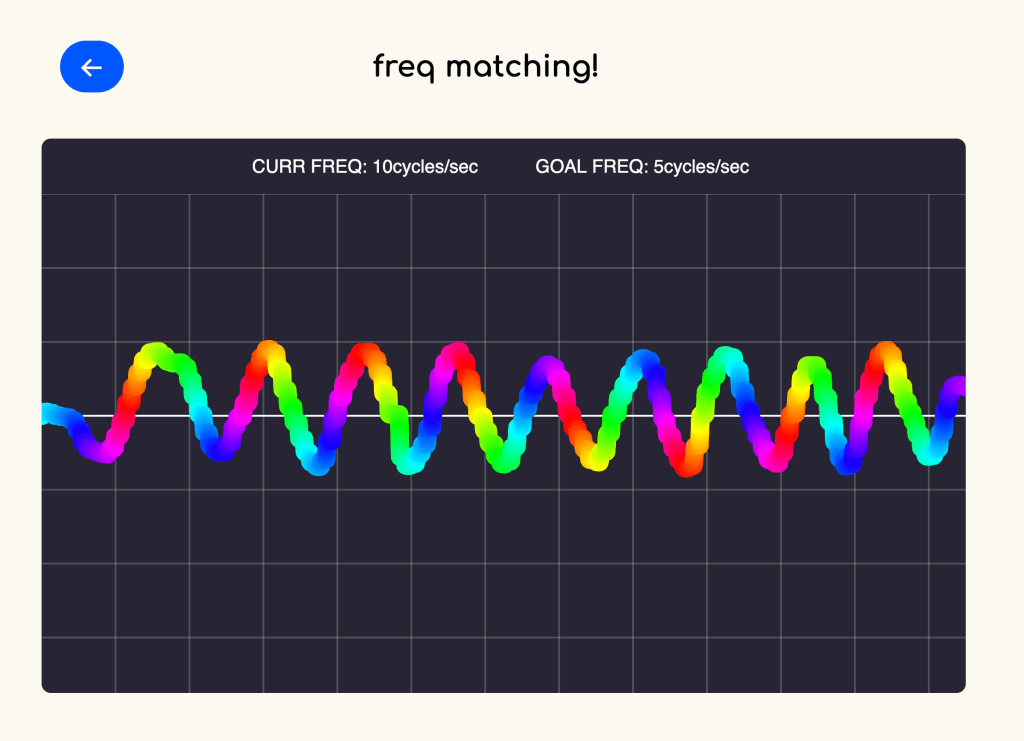
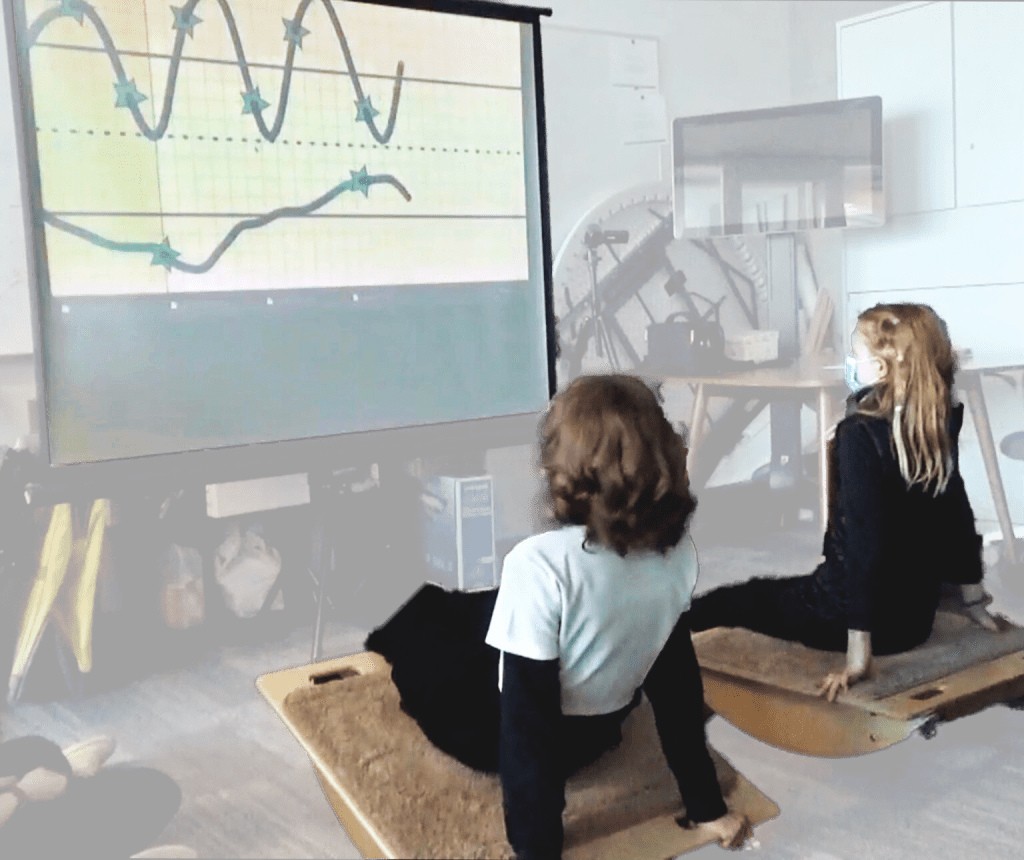
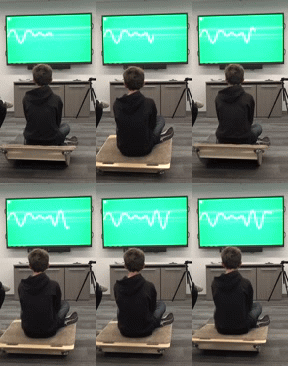
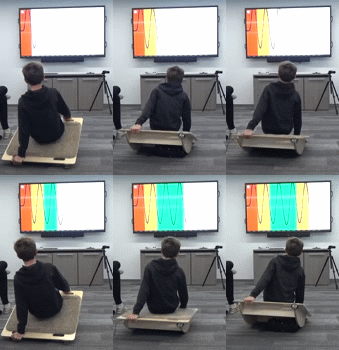
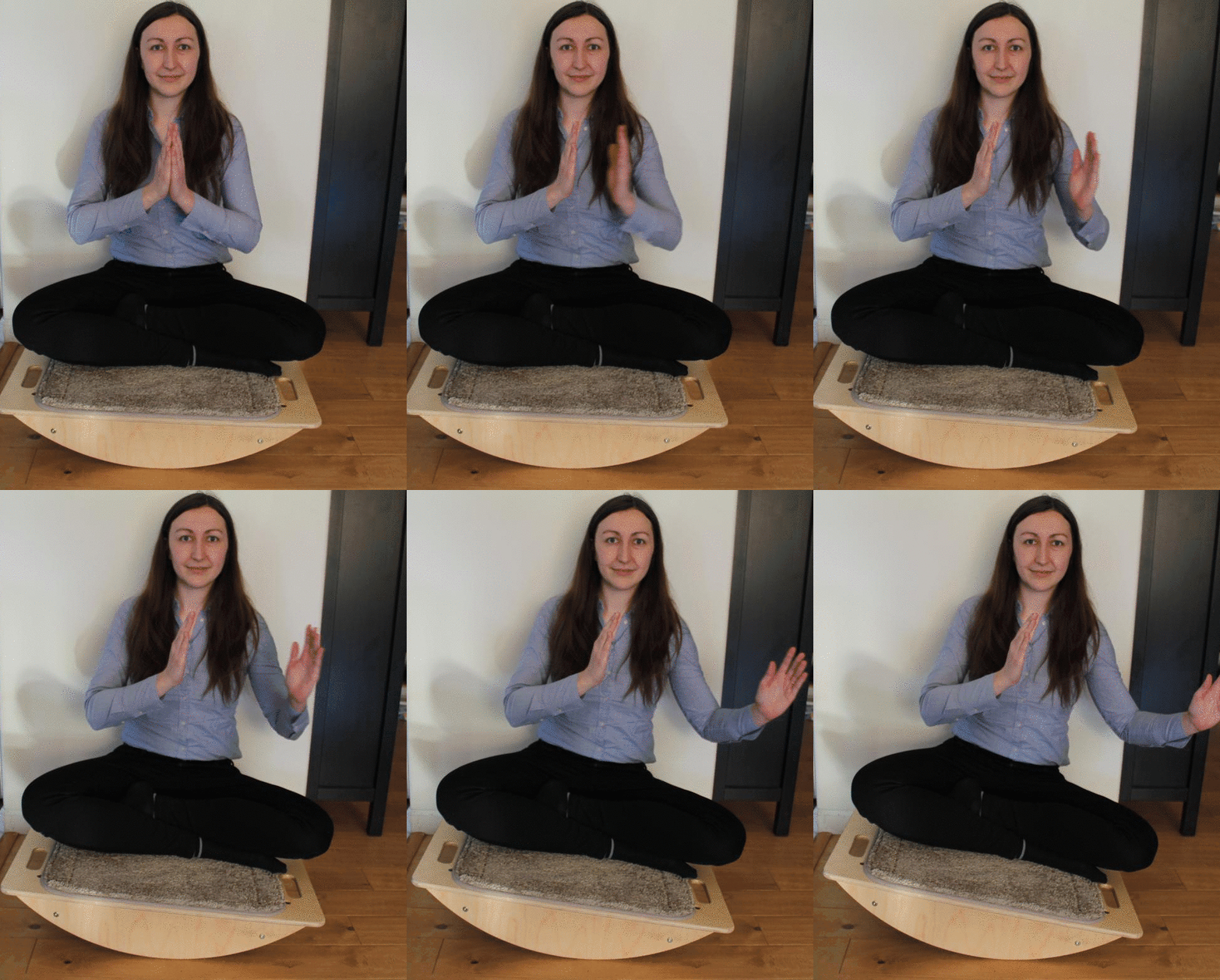
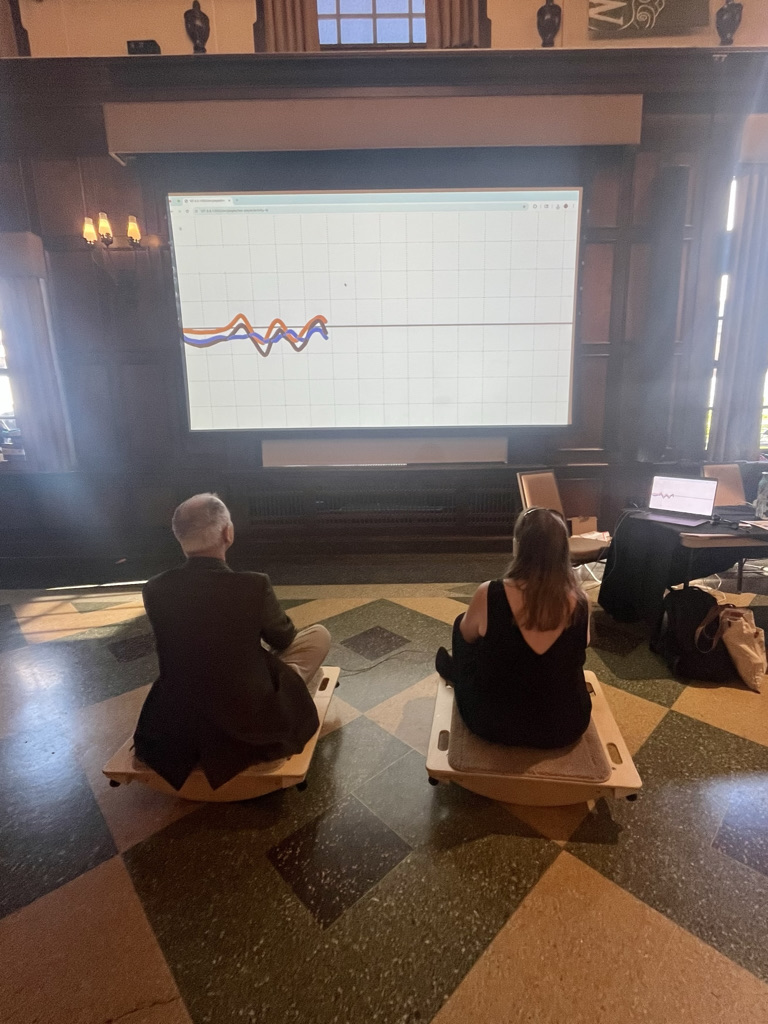
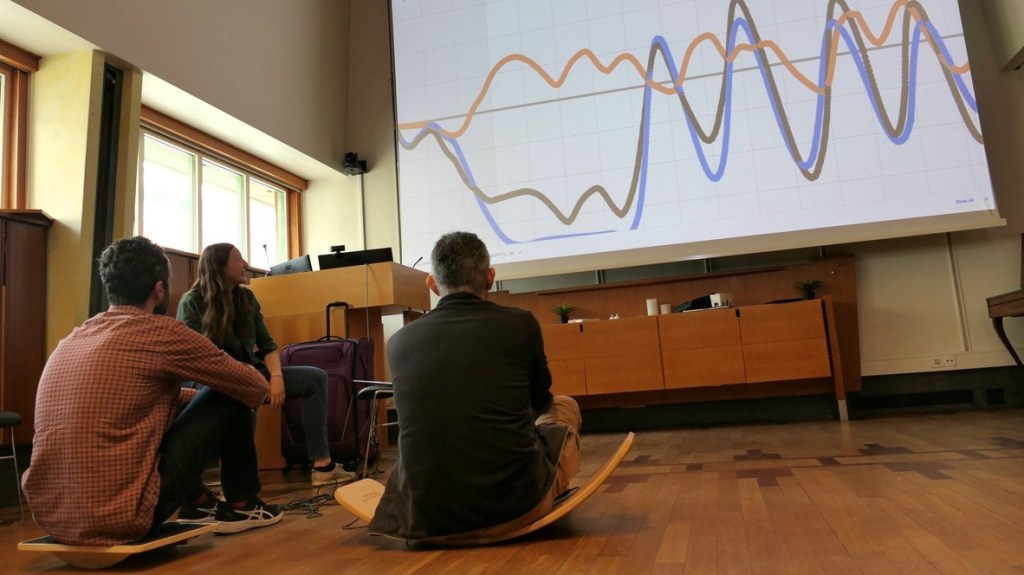
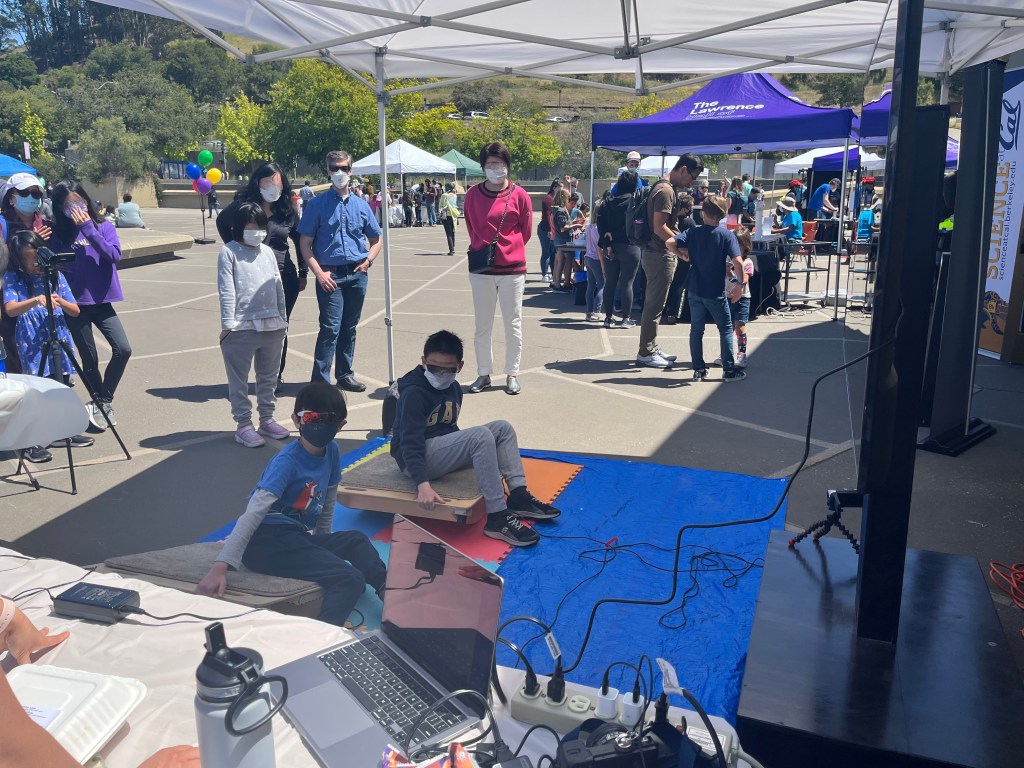
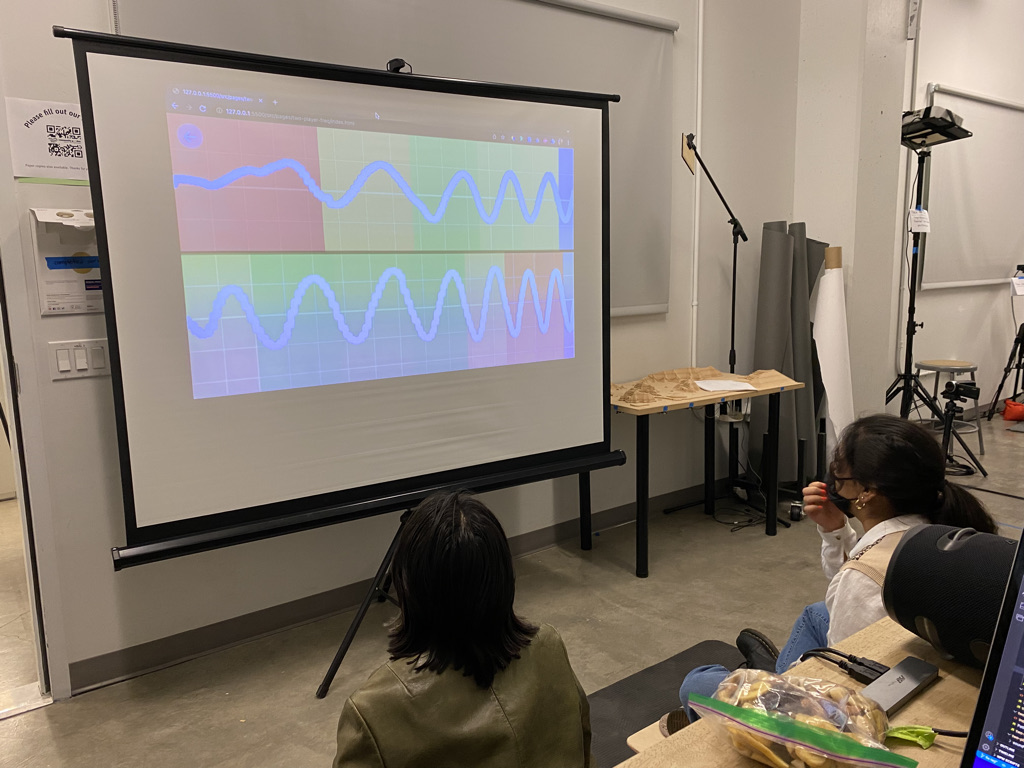
Balance Graphing cultivates embodied understandings of graphical representations and function equations. Learners generate dynamic graphical displays by rocking on the balance board, “being the graph,” not just “seeing the graph” (Gerofsky, 2011). Balance Graphing activities present discovery-based challenges where children discover and control critical function parameters such as the frequency and amplitude of sinusoidal graphs.
Read more:
- Tancredi, S., Wang, J. X., Li, H. L., Yao, C. J., Macfarlan, G. L., & Ryokai, K. (2022). Balance Board Math: “Being the graph” through the sense of balance for embodied self-regulation and learning. In M. Horn, M. Giannakos, & T. Pontual (Eds.), Proceedings of IDC ’22: Interaction Design and Children (Vol. “Full papers”, pp. 137–149). https://doi.org/10.1145/3501712.3529743
- Tancredi, S., Li, H.L., Wang J.X., Liu, Y., & Serrano Rodriguez, J. S. (2023). Beyond ‘just sitting there’: Function addition through collaborative balance sensory activity with Balance Board Math.. American Education Research Association – AERA 2023. Chicago, IL.
- Tancredi, S. & Serrano Rodriguez, J. (2025). Becoming the graph: Changes in children’s gestures following dynamic, whole-body graphing activities. American Education Research Association – AERA 2025.Denver, Colorado.
The Balance Number Line
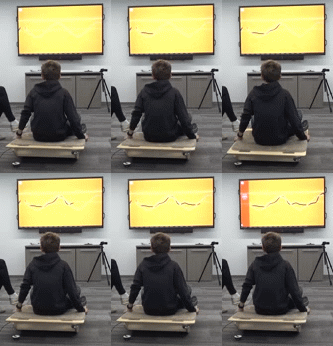
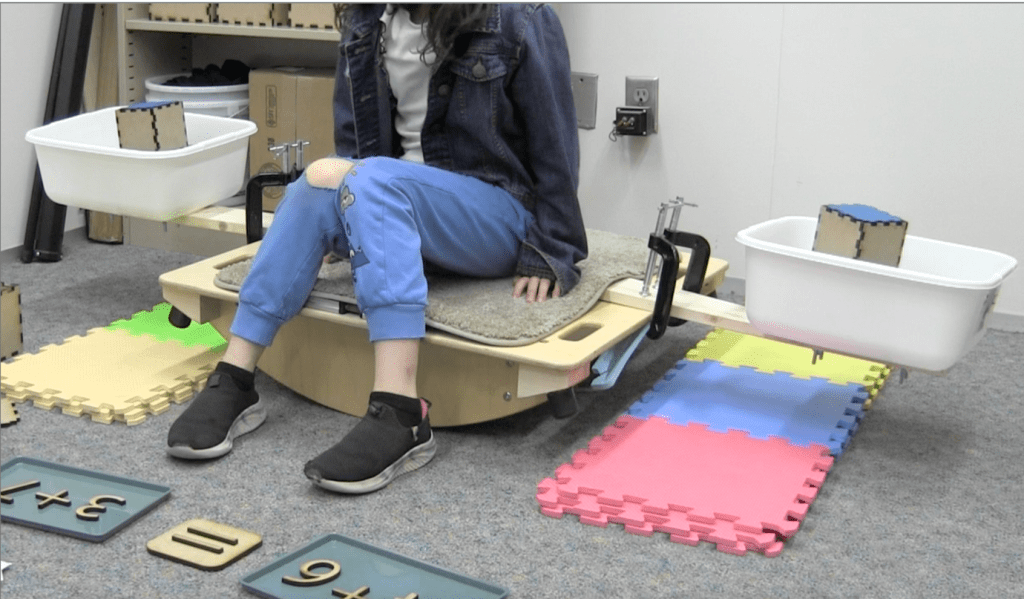
The Balance Number Line introduces negative numbers and the additive inverse principle through balance experiences. Learners sit on a balance board and move their hands along a number line in front of them. The shifting weight of their hands controls the tilt of the board. In this context, negative numbers are the counterbalancing points to their positive counterparts. Learners solve movement problems such as figuring out how to move both hands while staying balance to plan, explore, and analyze relations on the number line.
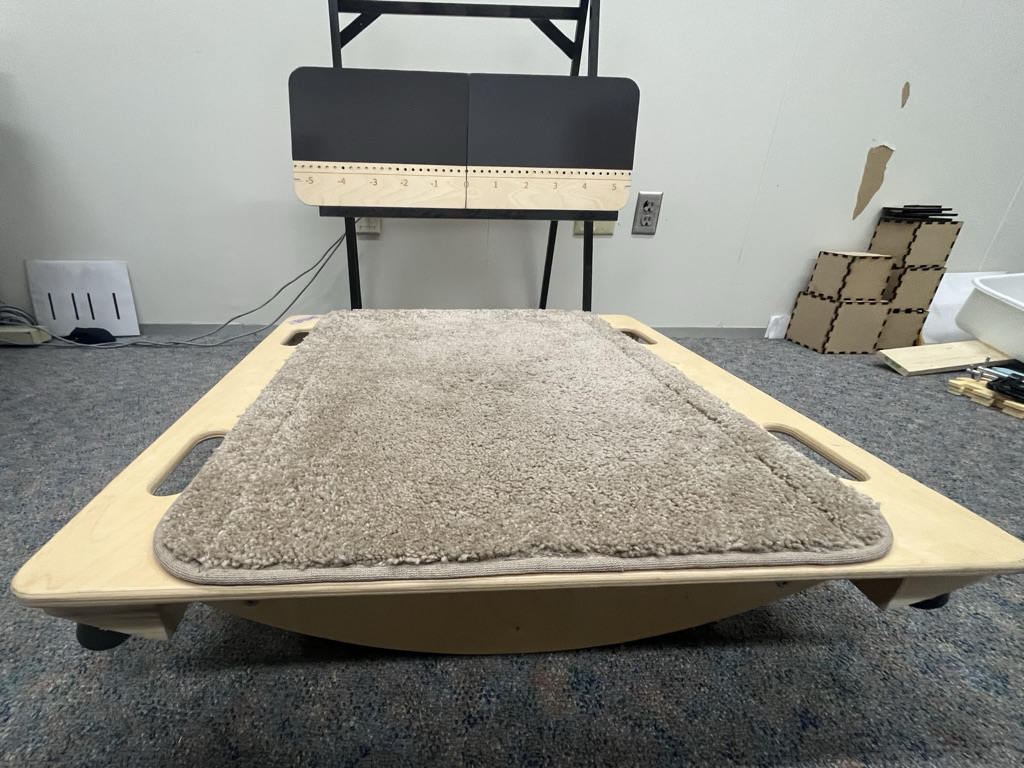
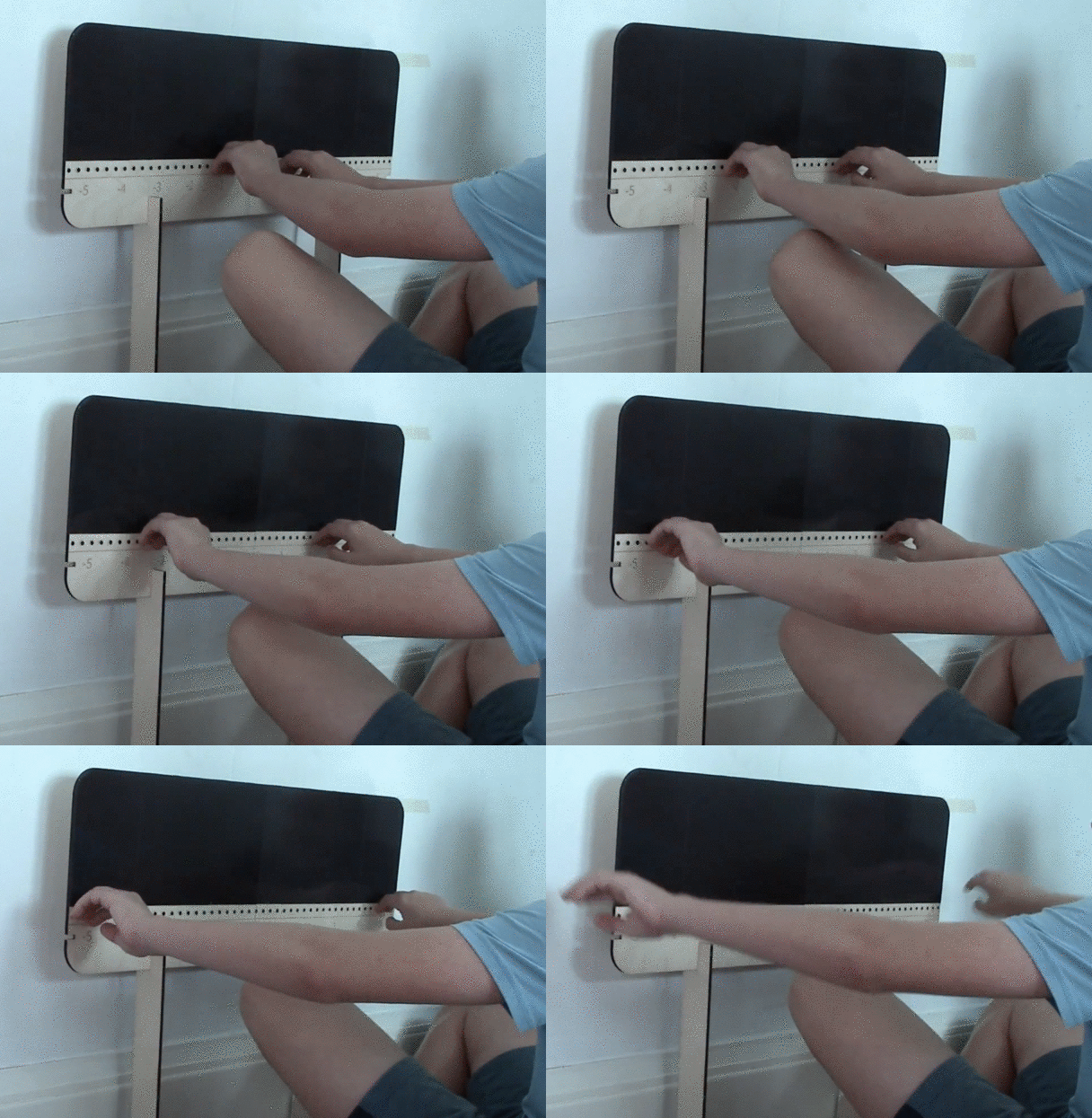
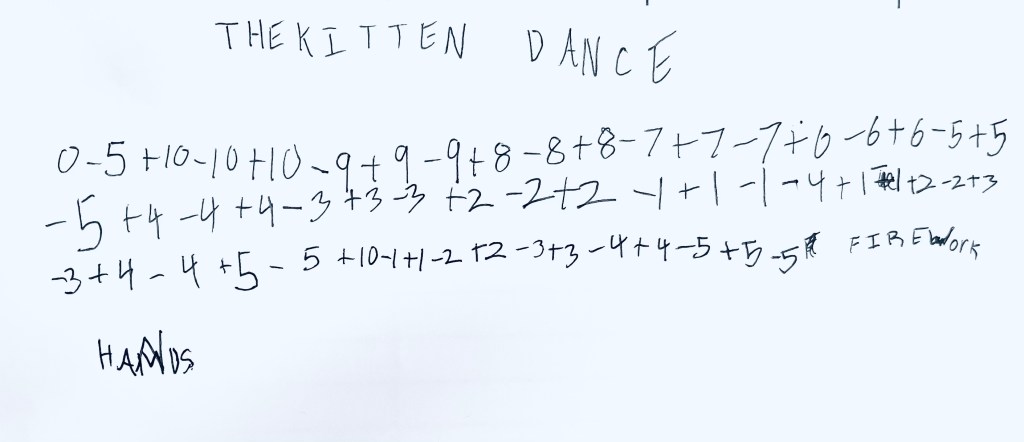
Using this set-up, kids then create their own movement compositions, writing them with math arithmetic expressions, and get to “play” other kids’ mathematical moves.
Balancing Equations
Learners reason about equations and inequalities challenges by using weighted unit and variable blocks to tilt the board they are sitting on.
Open Access Code
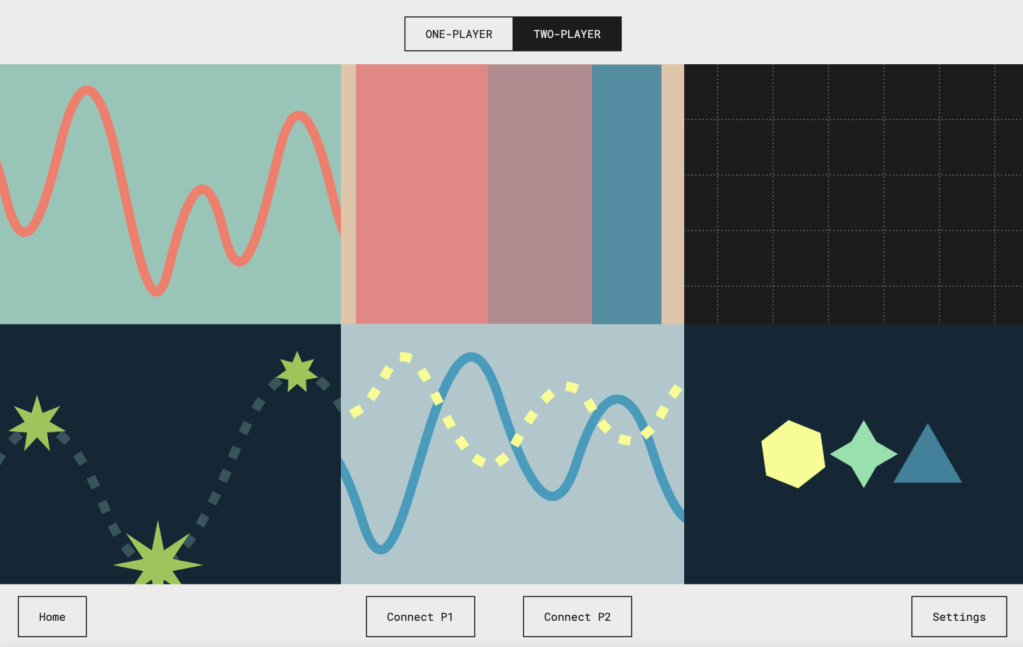
All BBM code is open access. We invite you to use and remix this project. Get started with this tutorial written by Julia Wang.
Recorded Presentations
Other Related Publications
Zhang, F. & Tancredi, S. (2025). Predicting electrodermal activity from conceptual and physical activity in an embodied learning environment. Proceedings of the Cognitive Science Society 2025 (Cogsci 2025) (Vol. “Posters”). San Francisco, CA.
Sar-Israel, M., Zhang, F. E*, Liu, Y., & Tancredi, S. (2024). Tracking sensory regulation during embodied learning with electrodermal activity. Proceedings of the 18th International Conference of the Learning Sciences – ICLS 2024 (Vol. “Short papers”). International Society for the Learning Sciences (ISLS), Buffalo, NY.
Tancredi, S., Chen, R. S. Y., Krause, C., & Siu, Y.–T. (2022). The need for SpEED: Rationale and guiding principles for Special-Education Embodied Design. In S. Macrine & J. Fugate (Eds.), Movement matters: How embodied cognition informs teaching and learning. M.I.T. Press. https://doi.org/10.7551/mitpress/13593.003.0021
Tancredi, S., Wang, J., Helen Tong Li, Yao, C. J., Ryokai, K., & Abrahamson, D. (2022). Graphing with Balance Board Math: Critical embodied design for regulation and learning. In C. Chinn, E. Tan, C. Chan, & Y. Kali (Eds.), “International collaboration toward educational innovation for all: Overarching research, development, and practices”—Proceedings of the 16th annual meeting of the Learning Sciences (ICLS 2022), Hiroshima, Japan (online) (pp. 1181-1184). ISLS.
Tancredi, S., Chen, R. S. Y., Krause, C., Abrahamson, D., & Gomez Paloma, F. (2021). Getting up to SpEED: Special Education Embodied Design for sensorially equitable inclusion. Education Sciences and Society – Open Access, 12(1). https://doi.org/10.3280/ess1-2021oa11818
Demos and Events
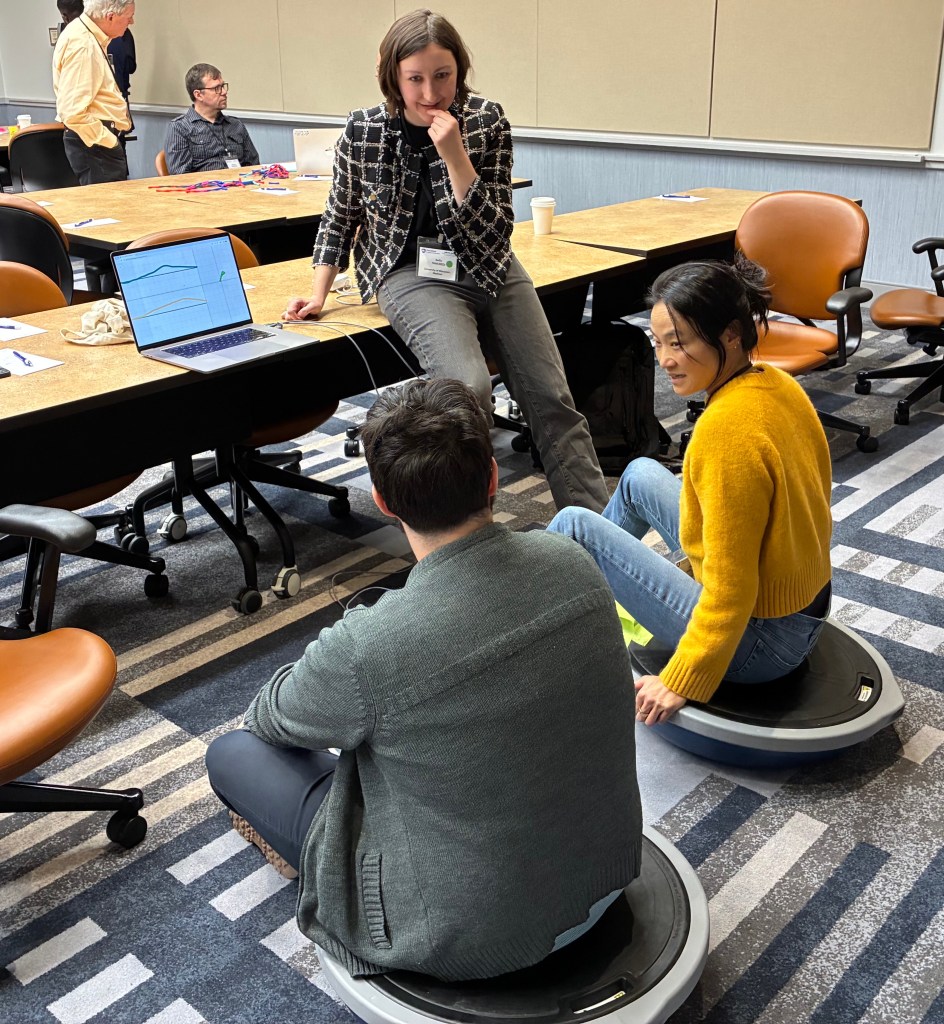
the North American Chapter of the International Group for the Psychology of Mathematics Education (PME-NA)
State College, PA, 2025
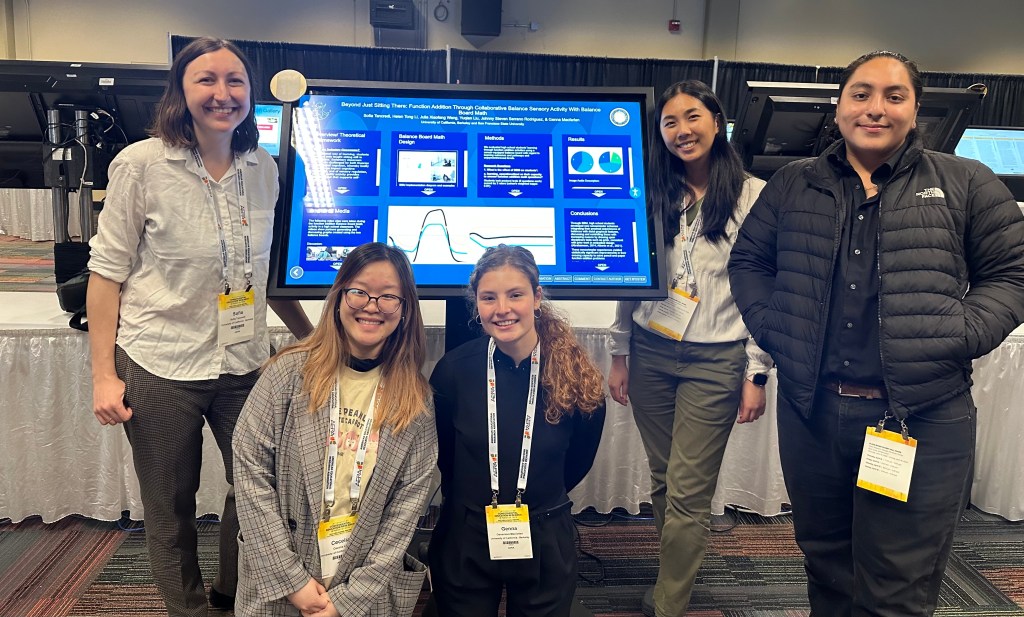
with research team: Yuqian Liu, Genna Macfarlan, Helen Li, and Johnny Serrano Rodriguez
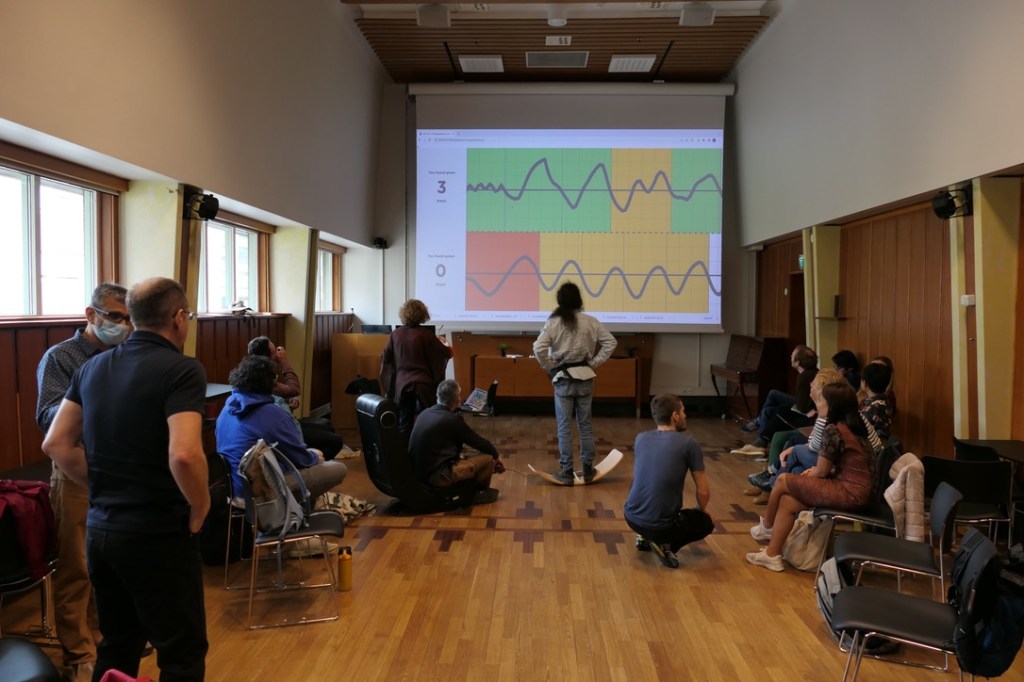
 Sofia Tancredi
