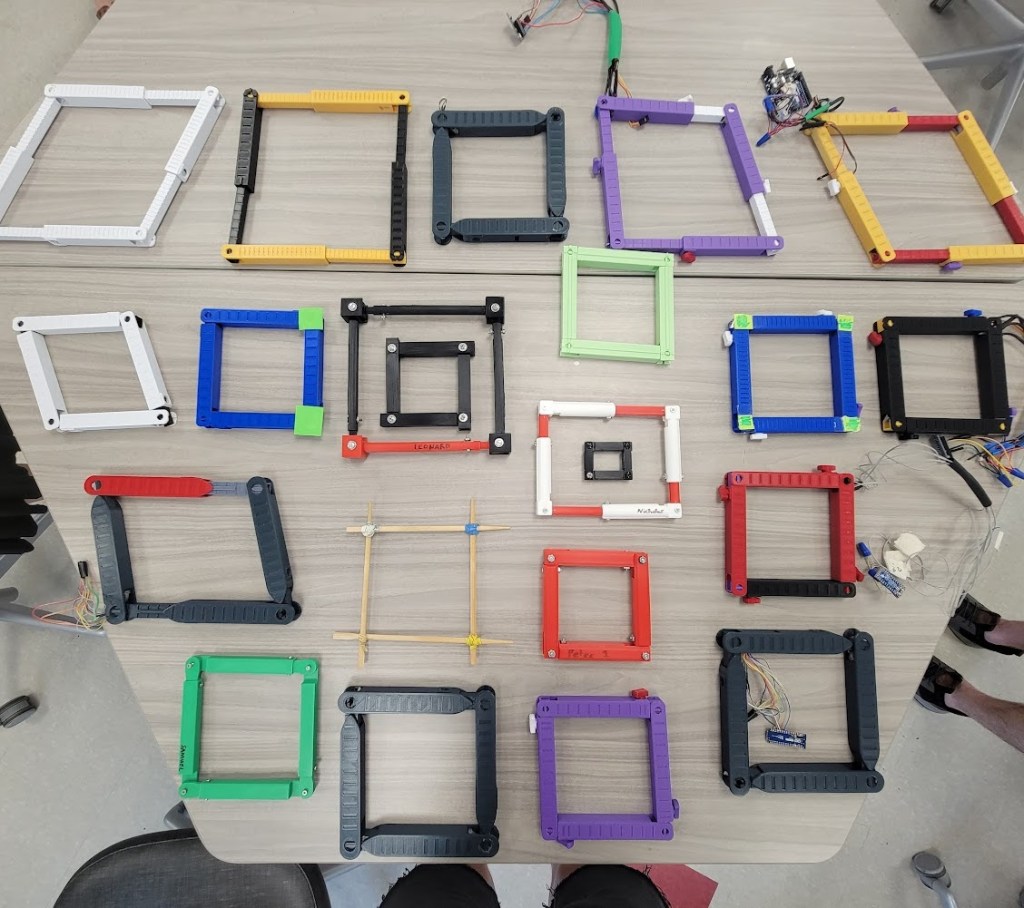
TeleTangibles are a new genre of interactive STEM education tool that enable collaborative tangible+digital discovery learning.
Key features of TeleTangibles:
- tangible tools tracked with realtime digital twins enable dynamic interaction with digital feedback
- sensing and actuating to enable co-manipulated with peers acting manually or digitally
- reconfigurable toolkit adaptable to different digital STEM learning contexts
Quadrilateral: the First TeleTangible
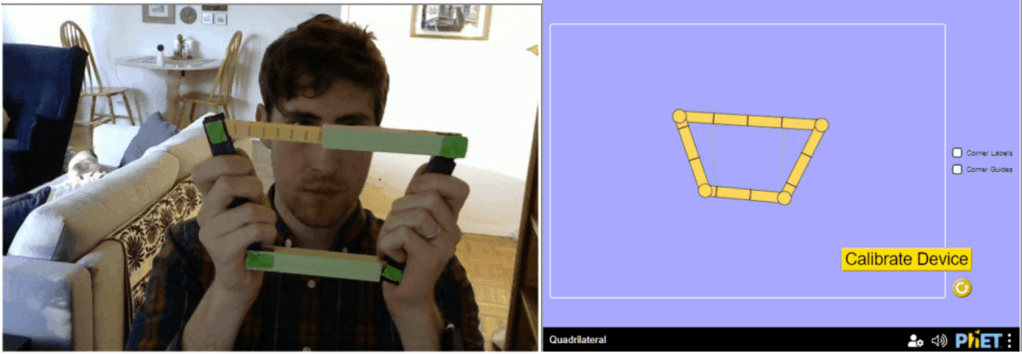
Quadrilateral, the first proof-of-concept TeleTangible, is an inclusive born-haptic digital geometry tool. Quadrilateral integrates an actuated and sensing manipulable quadrilateral tangible with a digital interface with voicing and sonification that can be used via touchscreen, keypress, webcam, and other interactions to facilitate meaningful mathematical interactions for learners with different sensory and motor access needs to learning together.
Developing the TeleTangibles Genre

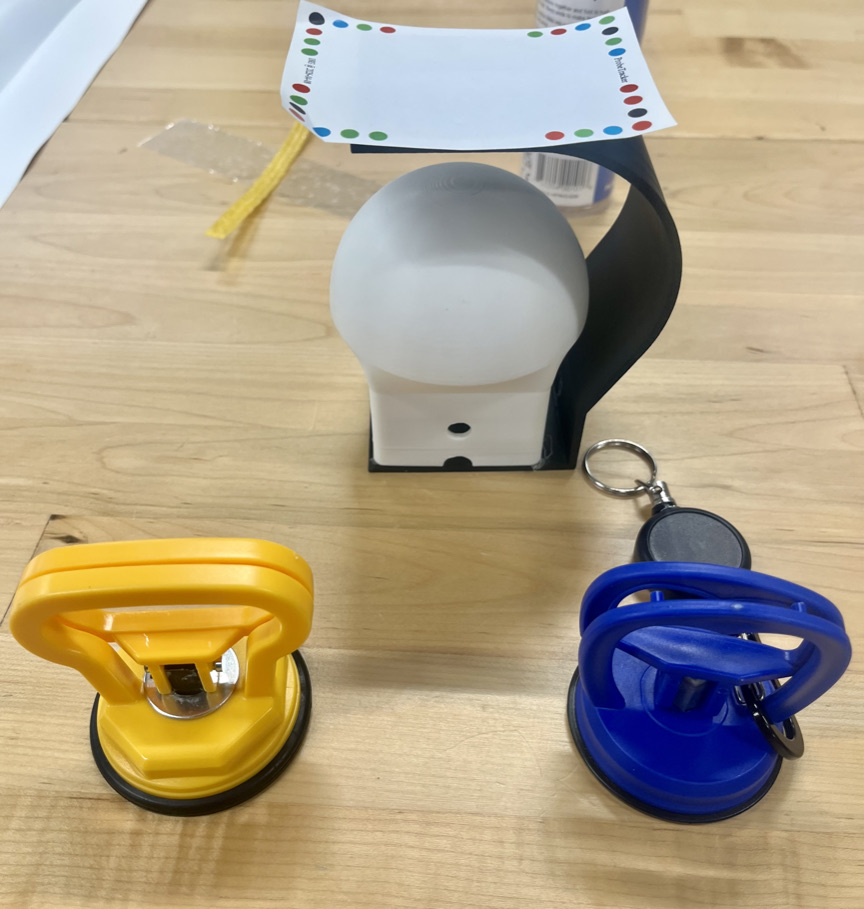
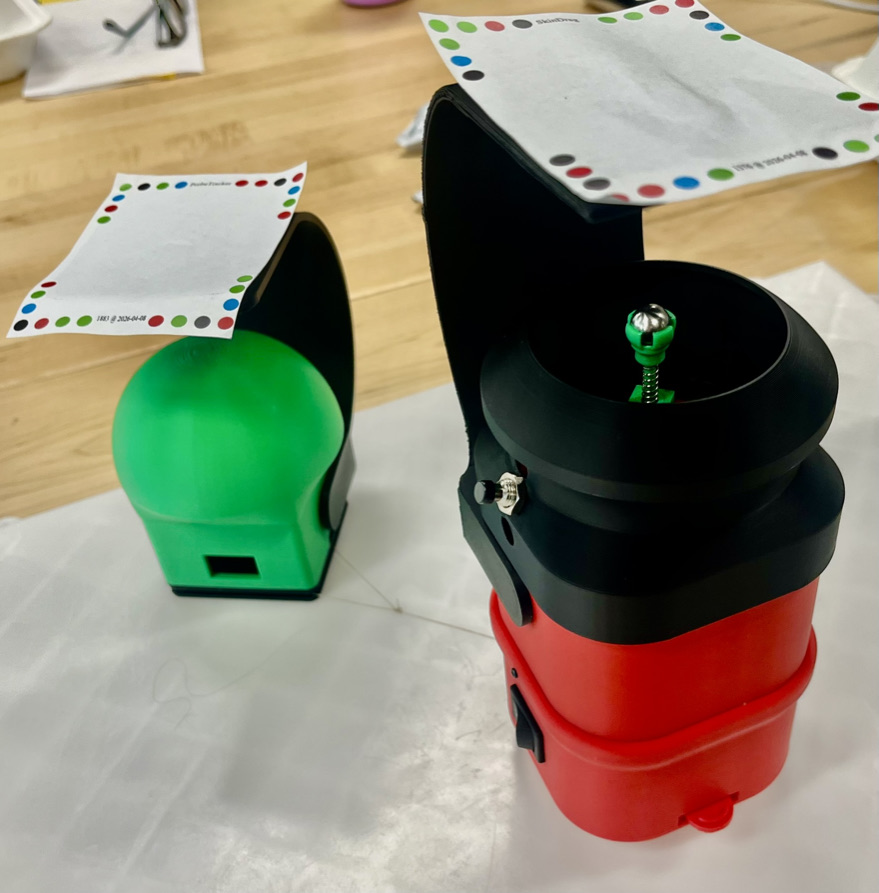
Supported by an NSF-RITEL Grant: “TeleTangibles: Flexible, Inclusive Tangibles to Bring Sensorimotor Interaction Back into STEM Education,” we are currently developing a suite of reconfigurable TeleTangibles usable with digital simulations across STEM learning domains.
Team
TeleTangibles is an interdisciplinary collaborative project, including members from:
- CHROME Lab (Mechanical Engineering, St Louis University)
- PhET Interactive Simulations Research and Accessibility (Physics, University of Colorado Boulder)
- the Embodied Design Research Lab (Learning Sciences, Berkeley School of Education, University of California, Berkeley)
- Wisconsin Center for Education Research (University of Wisconsin–Madison)
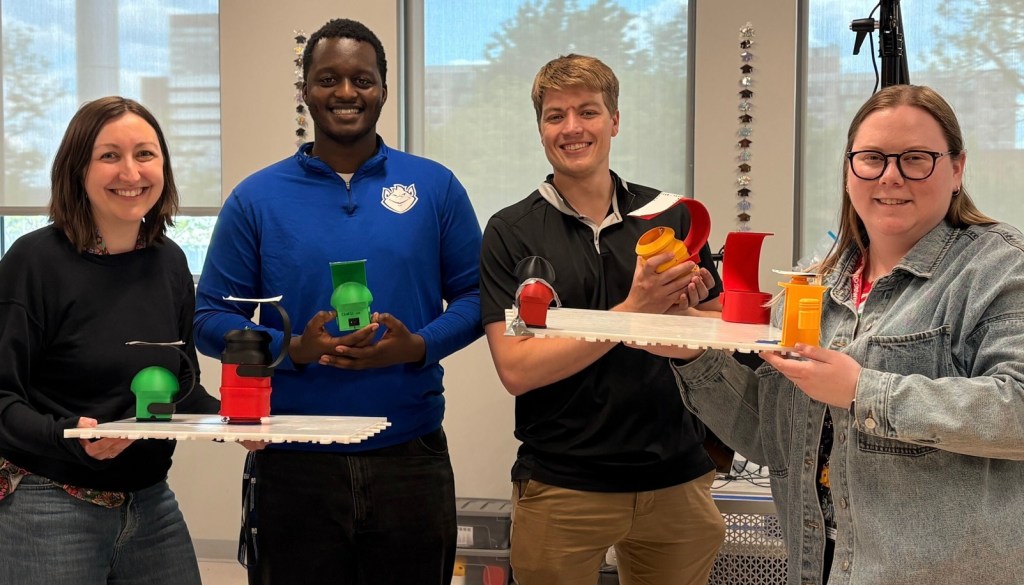
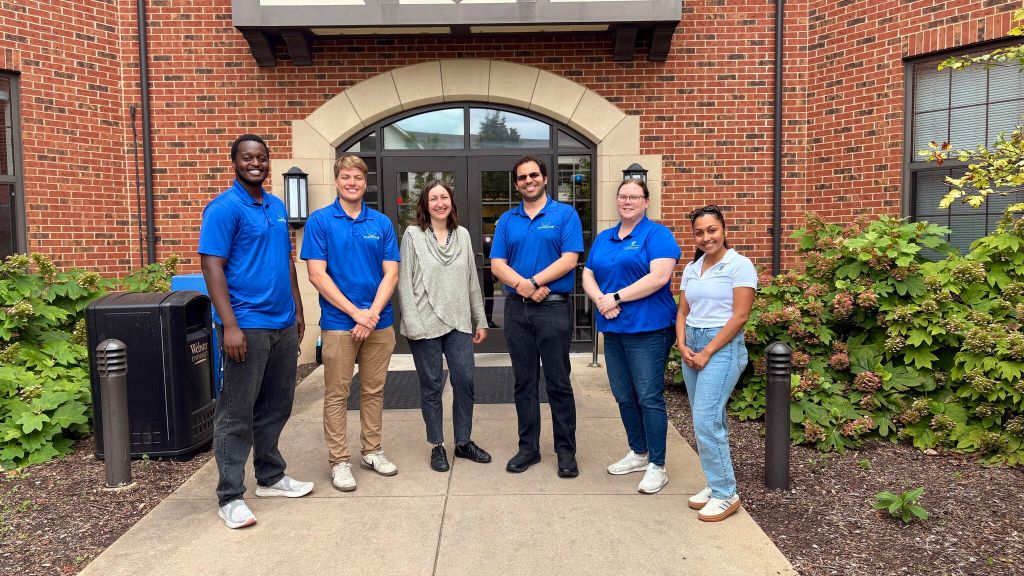
Project News
- The CHROME lab presented paper “TeleTangibles: Haptic Tangible Interfaces for Embodied Learning in STEM – A Case Study of Haptic Vector Representation” at the 2026 Haptics Symposium Conference.
- Sofia presented paper “Blind and visually impaired learners’ spatial explorations and imaginations with haptic technologies in STEM education co-design” at the 2026 American Education Research Association (AERA) conference.
- Several members of the TeleTangibles team co-organized or participated in a research workshop on “Design for Tactile and Embodied Learning,” organized under the HCR@Work Initiative and the Tactile Media Alliance and hosted by Abigale Stangl at Georgia Tech.
- The TeleTangibles project was awarded an NSF-RITEL Grant in 2024. (Note: Any opinions, findings and conclusions or recommendations expressed in this material are those of the author(s) and do not necessarily reflect the views of the National Science Foundation.)
- Our paper on the development of the Quad won best paper at the Conference on Research on Educational Neuroscience in 2022.
Publications, Presentations, and Tools
Papers
Talks
Open-Access Tools

The digital portion of Quadrilateral is available open-access here:
Quadrilateral (with voicing & sonification)
And here, you can find a computer vision protoype version:
Quadrilateral (computer vision prototype)
Using your device’s camera, detect solid-color objects to represent the four corners of the quadrilateral in the simulation (e.g., blocks). There is one-color or four-color support for corner tracking. Move the corner objects to explore different shapes in the quadrilateral family. Camera Input: Objects feature pairs well with audio features.