2026
Exploring Researcher Learning with Collaborative Poetics
International Society of the Learning Sciences in Irvine, CA, June 2026
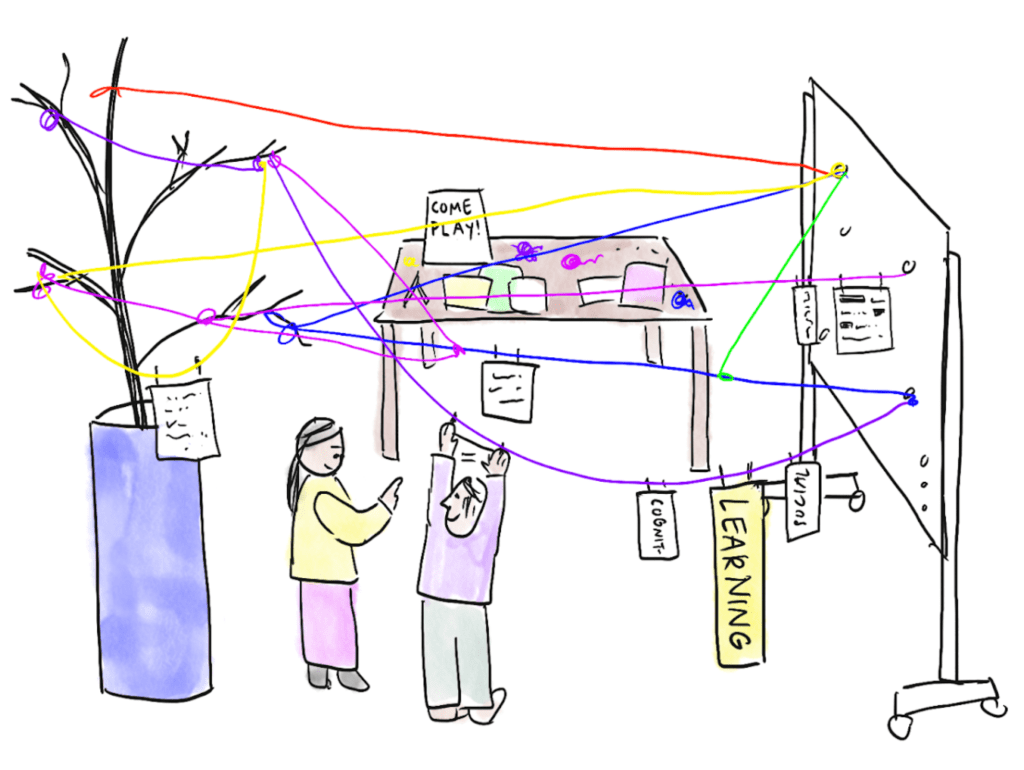
Research can change us, if we let it. This June at the International Society for the Learning Sciences conference at UC Irvine, we (The Mattering Collective) are excited to be building a multimedia interactive poetry installation that will invite researchers to explore the edges of what their research means to them. Drawing on learning sciences scholarship on the embodied, affective, and relational nature of learning, we conceptualize the reciprocal transformation of researcher and research as an intrinsically creative and embodied process, in which affective and cognitive experiences unfold and morph together. We assert that the arts, and poetic processes in particular, have much to offer in helping us grapple with the intricate intertwinement of our emotions, desires, thoughts, values, and goals as researchers. Through collaborative poetic processes of reflexivity, we invite the learning sciences community to strengthen our connections to our own complex humanity, to our research partners and their complex humanity, and to our aspirations for ourselves, our work, and our worlds.
Will share more information on where and when to find us when we have them!
2025
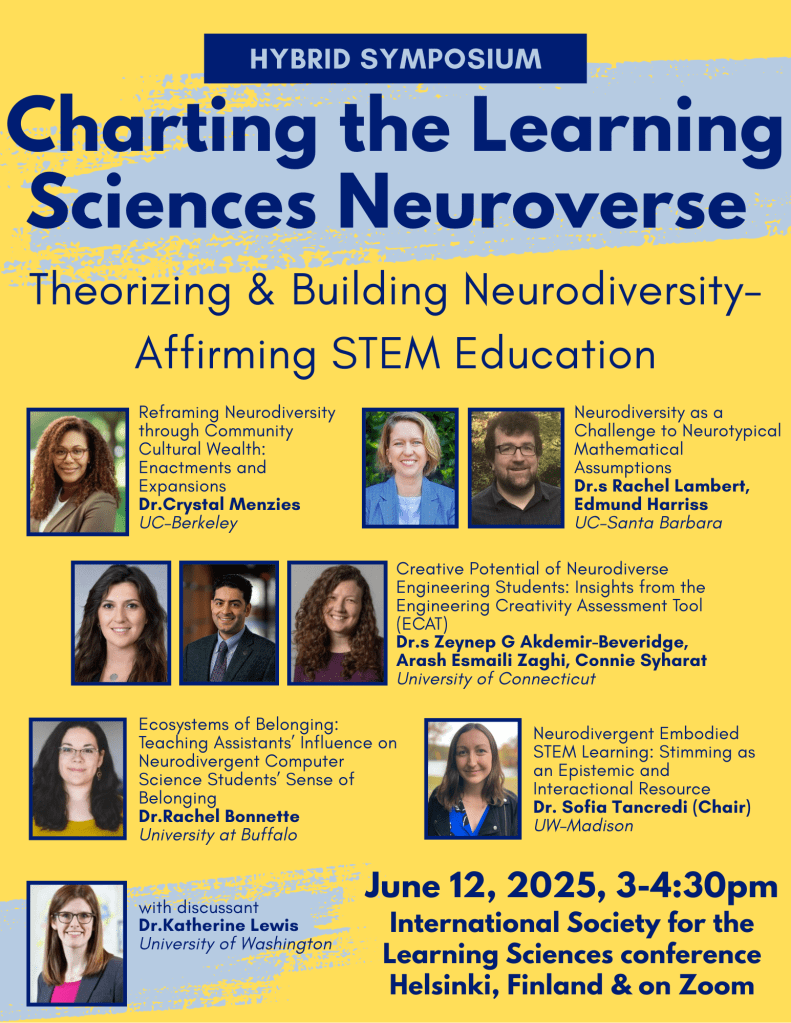
Charting the Learning Sciences Neuroverse
I’m organizing a symposium at the International Society for the Learning Sciences conference in Helsinki this year on theorizing and building neurodiversity-affirming STEM (science, technology, engineering, and math) education. It has been special to bring together a group of scholars thinking about neurodivergence across the educational ecosystem, from instructional tools to curricular and teaching decisions to assessment, and to begin to piece together a broader vision for neurodiversity-affirming STEM education. Hope to see you there!
The Senses and the Higher Ed Classroom
May 15th, 1:45-2:35pm at Union South
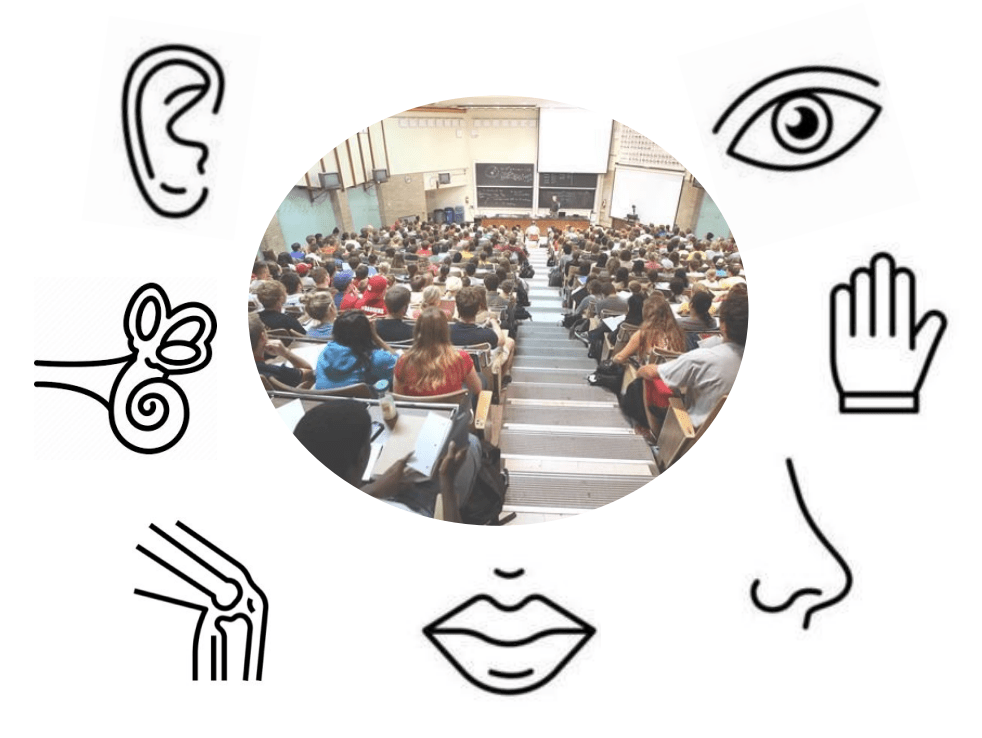
I’ll be running a workshop at the University of Wisconsin-Madison Teaching and Learning Symposium this year called “Make it Sensational: Instruction that Taps into Students’ Sensorimotor Needs.” Here’s the session description:
Emerging cognitive sciences research suggests that learning is not just “in the head”: the kinds of bodily interaction experiences we offer students impact how they engage and what they learn. This interactive session will distill key principles and practices from research on “embodied learning” and the senses that can support engaging, inclusive instruction. We’ll cover the prospective role of movement in the classroom, from gesture to large scale movements to fidgeting, and explore demos of embodied learning approaches.
2024
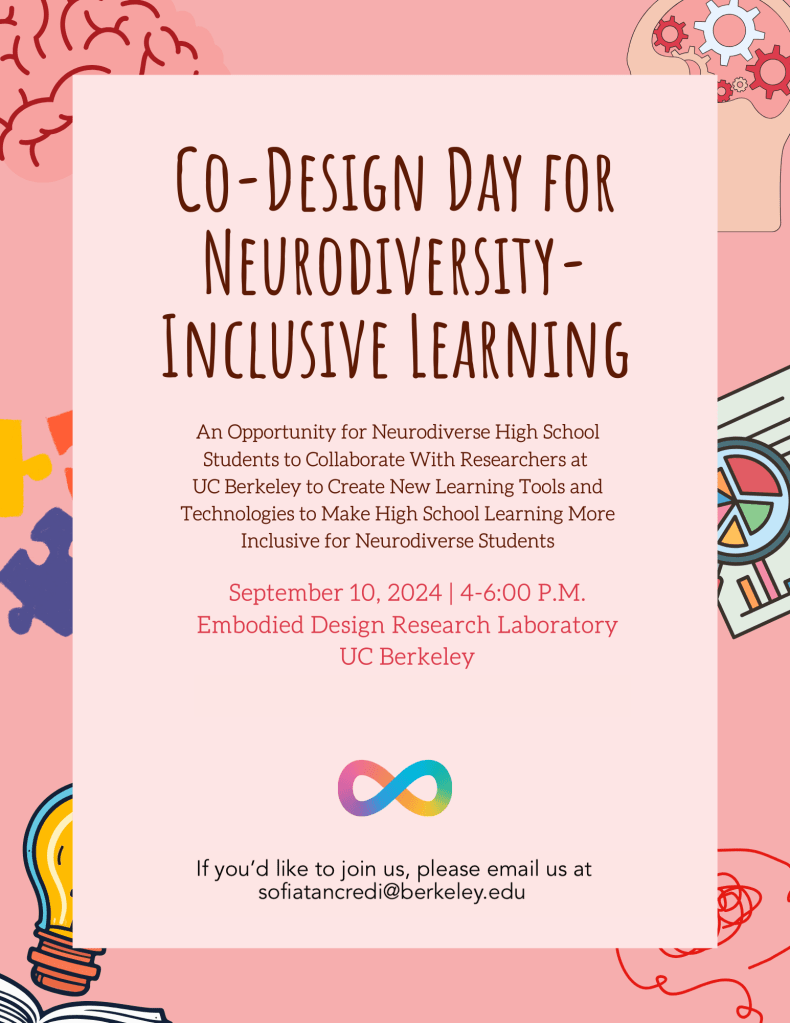
Co-Design Day for Neurodiversity-Inclusive Learning
September 10, 2024, 3-5pm at the University of California, Berkeley
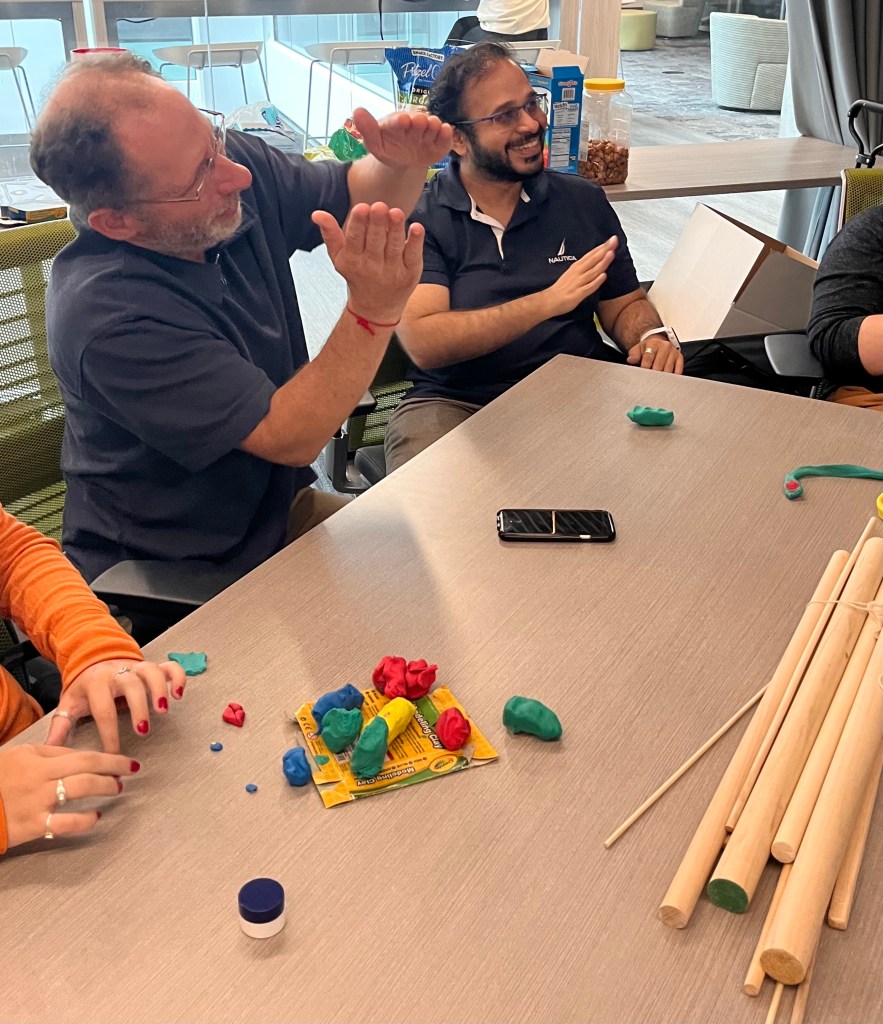
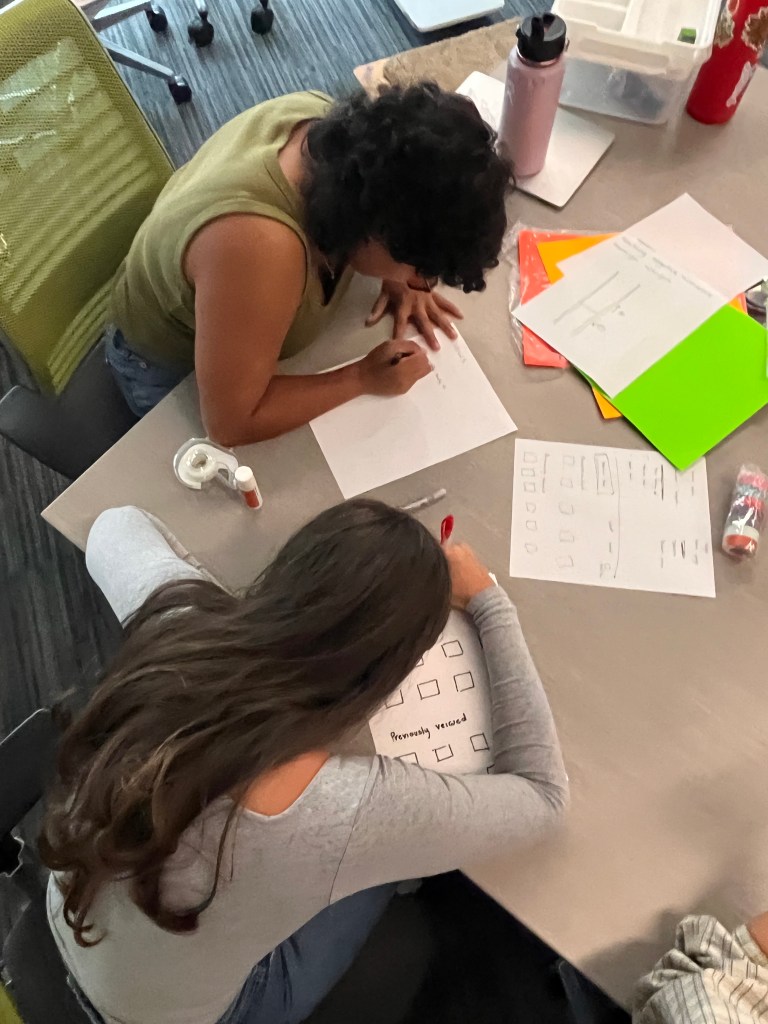
This event was dreamed up with high schooler and student organization leader Reese Langdon of The College Preparatory School, Oakland. Our goal was to invite neurodiverse high schoolers to get to know researchers studying embodied learning, share about their lived experiences in school, and ultimately, to do some design thinking together. It was a beautiful afternoon of sharing and creativity, brainstorming some wonderful technologies that draw on embodiment theory to inform practical solutions for neurodivergent learners in today’s schools (I really want an Up2Speed pen!)
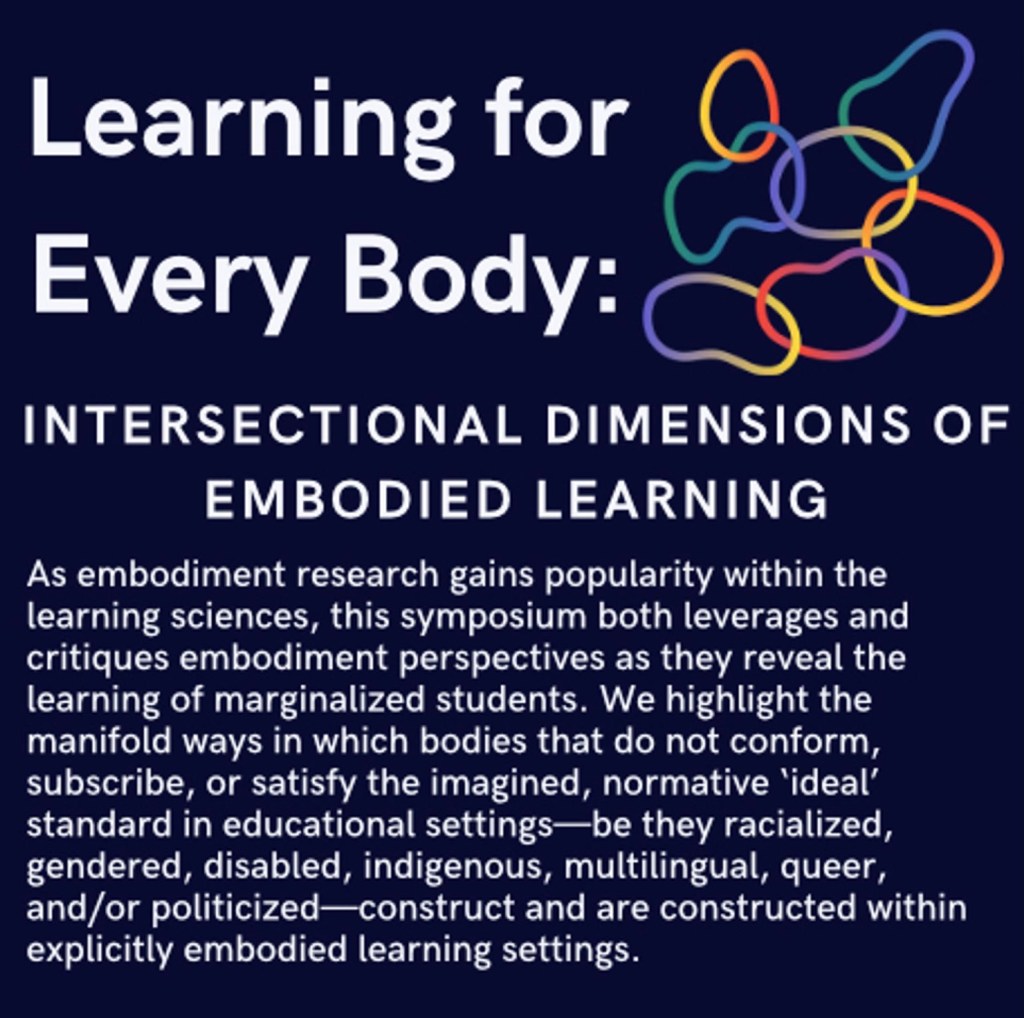
Learning for Every Body: Intersectional Dimensions of Embodied Learning
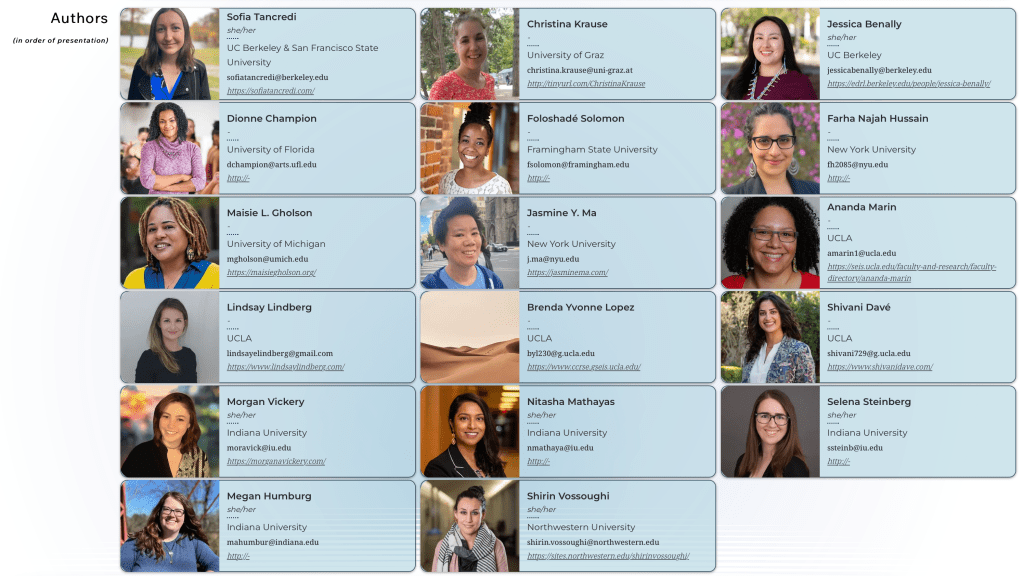
Symposium at the International Society of the Learning Sciences in Buffalo, NY, June 2024
Morgan Vickery and I met at the American Educational Research Association conference in 2023, and chatted about how we wished there were more cross-talk among people considering different dimensions of embodiment. Within the hour, we’d decided to organize something for the next International Society of the Learning Sciences conference bringing together scholars studying different kinds of bodily diversity and marginalization in learning. Thanks to all who participated and attended- it was an honor to co-chair this session!
For more information and access to symposium papers, visit criticalbodies.com
 Sofia Tancredi